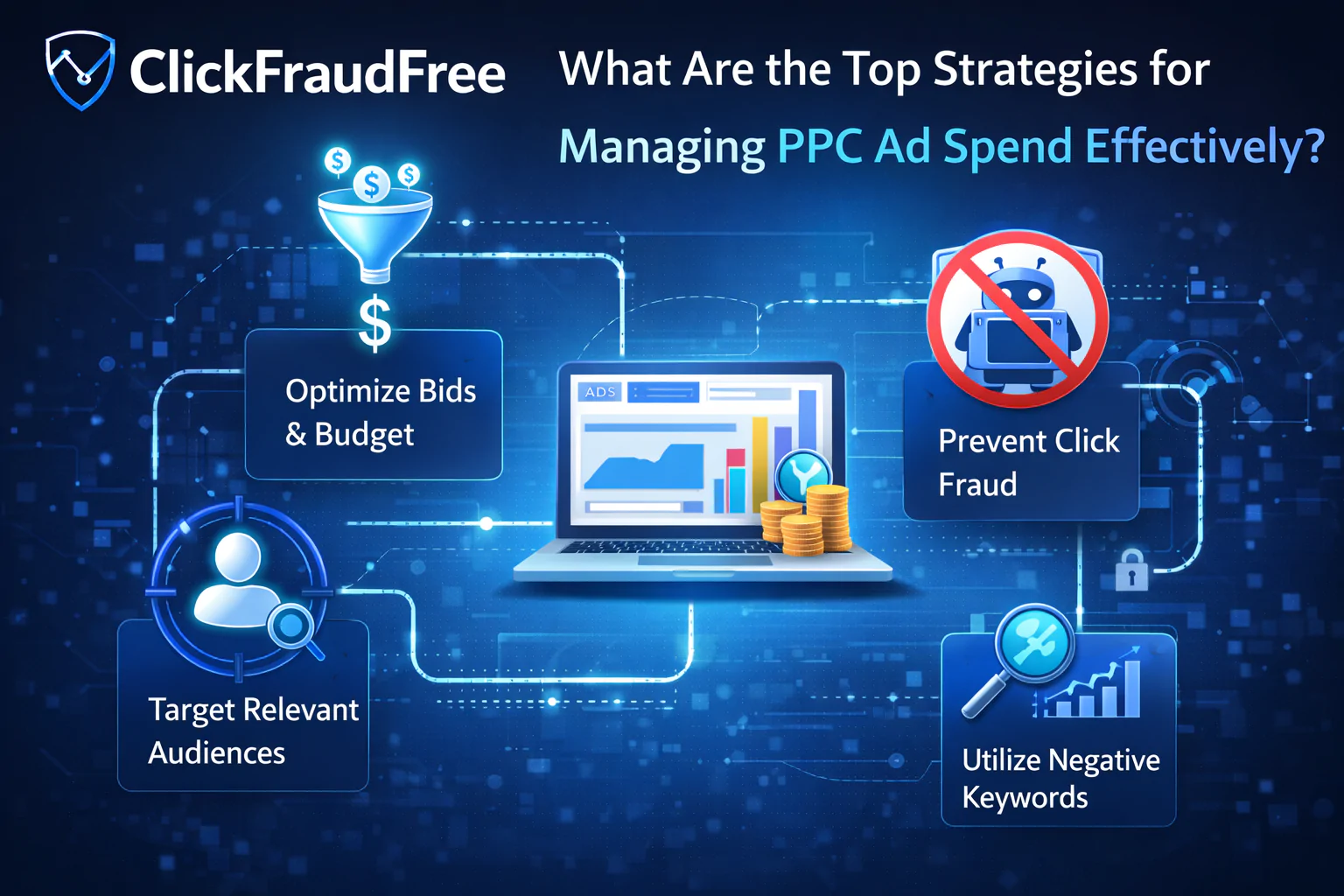
What are the top strategies for managing PPC ad spend effectively?

Understanding PPC Ad Spend

PPC, or Pay-Per-Click, advertising is a powerful tool for driving targeted traffic to your website. However, managing your PPC ad spend effectively is crucial to ensure a positive return on investment. Understanding how PPC works and the factors that influence costs can help you make informed decisions. Factors such as keyword competitiveness, target audience, and ad quality significantly impact your ad spend.

By regularly analyzing your PPC campaigns, you can identify which ads are performing well and which need adjustments. Effective management involves monitoring your budget allocation across various campaigns, ensuring that funds are directed towards high-performing ads while minimizing spend on underperforming ones. It’s also essential to continuously test and optimize your ads for better results. Visit Click Fraud Free for insights on protecting your ad spend from fraudulent clicks.

Setting Clear PPC Objectives

Establishing clear objectives is fundamental to the success of any PPC campaign. Without well-defined goals, it becomes challenging to measure the effectiveness of your advertising efforts. Whether your aim is to increase brand awareness, drive website traffic, or boost sales, setting specific and measurable objectives is key. This clarity will guide your strategy and help you allocate your budget efficiently.

Once you have set your objectives, align your PPC campaigns accordingly. Ensure that your ad copy, landing pages, and keyword selection reflect your goals. Regularly review your progress against these objectives and adjust your strategy as needed to stay on track. For more detailed guidance on setting and achieving PPC objectives, check out the resources available at Click Fraud Free.

Keyword Research Techniques

Effective keyword research is the cornerstone of any successful PPC strategy. Identifying the right keywords can significantly impact your ad’s visibility and engagement. Begin by using tools like Google Keyword Planner to discover high-volume, low-competition keywords relevant to your business. Consider both short-tail and long-tail keywords to capture various search intents.

It’s also important to analyze competitor keywords to gain insights into their strategies. This can help you uncover opportunities that you might have overlooked. Regularly updating your keyword list and refining it based on performance data is critical for maintaining a competitive edge. For more tips on optimizing your keyword strategy, explore the expert advice at Click Fraud Free.

  • Use keyword tools for discovery
  • Analyze competitor keywords
  • Update and refine regularly

Optimizing Ad Copy and Design

One of the most vital strategies for managing PPC ad spend effectively is optimizing both ad copy and design. A well-crafted ad engages potential customers and compels them to click, which can significantly enhance your return on investment. Start by understanding your audience’s needs and preferences, and tailor your messaging accordingly. Use compelling headlines, clear calls-to-action, and ensure the ad design is visually appealing and aligns with your brand identity.

Additionally, regularly A/B test different versions of your ad copy and design to determine which combinations yield the best performance. This iterative process allows you to refine your ads over time, improving click-through rates and reducing costs. Remember, the goal is not just to attract clicks but to drive meaningful conversions that justify your ad expenditure. For more insights and tips on managing your PPC campaigns effectively, visit clickfraudfree.us.

Consider incorporating customer testimonials or unique selling propositions to differentiate your ads from competitors. Highlighting the benefits or solutions your product or service offers can capture the interest of potential buyers. Keeping your ads fresh and relevant is key to maintaining engagement and optimizing your ad spend.

Effective Bidding Strategies

Implementing effective bidding strategies is crucial for maximizing the efficiency of your PPC ad campaigns. One popular approach is automated bidding, which uses algorithms to adjust bids in real-time, ensuring optimal placement while staying within budget. This method can save time and reduce the risk of overspending. However, manual bidding still has its place, particularly when you want more control over specific keywords or ad groups.

When crafting your bidding strategy, consider factors such as your overall marketing goals, the competition level of your keywords, and your budget constraints. It’s often beneficial to start with a conservative budget and gradually increase it based on performance metrics. Regularly reviewing and adjusting your bids can help maintain a competitive edge while optimizing ad spend.

For those new to PPC, experimenting with both manual and automated strategies may provide valuable insights into what works best for your business. Visit clickfraudfree.us to learn more about optimizing your PPC strategy and minimizing click fraud risks.

Utilizing Negative Keywords

To manage your PPC ad spend effectively, utilizing negative keywords is an essential strategy. Negative keywords prevent your ads from appearing in irrelevant searches, which can help reduce wasted spend and improve overall campaign performance. By excluding terms that don’t align with your business goals, you can focus your budget on more relevant searches that are likely to convert.

Identify negative keywords by analyzing your search terms report to see which queries are triggering your ads but not resulting in conversions. Regularly update your negative keyword list to adapt to changing trends and maintain campaign relevance. This practice not only improves your ad targeting but also enhances the quality score, potentially reducing your cost-per-click.

Incorporating negative keywords is a proactive way to streamline your ad spend and ensure your marketing dollars are being used wisely. For more detailed guidance on how to effectively use negative keywords and optimize your PPC campaigns, check out clickfraudfree.us.

Tracking and Analyzing Performance

Effective management of PPC ad spend starts with meticulous tracking and analyzing of performance metrics. Understanding where your budget is going and how it is performing is crucial. By using tools like Google Analytics, advertisers can pinpoint which keywords and ads are driving traffic and conversions. This data-driven approach ensures that you are not just spending your budget but investing it wisely to maximize returns.

Regularly reviewing your campaign data helps identify underperforming ads or keywords, allowing you to make necessary adjustments. It’s important to look at metrics such as click-through rates (CTR), conversion rates, and cost per conversion. By focusing on these, businesses can ensure their strategies are aligned with their financial goals and marketing objectives. For more tips on tracking PPC performance, visit our website.

Adjusting Campaigns for Better ROI

To enhance the return on investment (ROI) of your PPC campaigns, it is essential to make strategic adjustments based on performance data. Start by identifying the best-performing ads and keywords, and consider reallocating more budget towards them. This ensures that your spending is focused on elements that deliver the best results. Additionally, regularly updating your ad copy and landing pages can significantly impact your campaign’s effectiveness.

Another crucial strategy is to test different bidding strategies. Experimenting with manual versus automated bidding can help uncover the most cost-efficient approach for your business. Moreover, implementing negative keywords can prevent your ads from showing up in irrelevant searches, thereby reducing unnecessary clicks and improving ROI. For a comprehensive guide on optimizing PPC campaigns, check out Click Fraud Free.

Leveraging Automation Tools

Incorporating automation tools into your PPC strategy can significantly enhance efficiency and effectiveness. These tools can handle repetitive tasks such as bid adjustments, keyword research, and ad testing, allowing marketers to focus on strategic decision-making. Automation not only saves time but also optimizes your campaigns by making data-driven decisions in real-time.

When leveraging automation, it’s crucial to select the right tools that align with your business objectives. Platforms like Google Ads offer various automated features, such as Smart Bidding, which adjusts bids to maximize conversions. Additionally, using automated rules can help you pause underperforming ads or increase bids on top-performing keywords. Embrace these powerful tools to streamline your PPC management and maximize your ad spend. For more insights on using automation in PPC, visit Click Fraud Free.

Continuous Learning and Adaptation

In the ever-evolving world of Pay-Per-Click (PPC) advertising, staying ahead of the competition requires a commitment to continuous learning and adaptation. The digital landscape is dynamic, and what worked yesterday might not be effective today. To manage your PPC ad spend effectively, you need to be in tune with the latest trends and updates in the industry. Regularly attending webinars, reading industry blogs, and participating in online forums can provide valuable insights and strategies to optimize your campaigns.

Moreover, experimenting with new techniques and tools is vital. By integrating advanced analytics and leveraging AI-driven solutions, you can gain a deeper understanding of your audience’s behavior. Platforms like ClickFraudFree offer tools that help in identifying fraudulent clicks, ensuring that your ad spend is allocated efficiently. Being open to new methodologies not only aids in optimizing ad spend but also enhances the overall effectiveness of your campaigns.

Key Strategies for Adaptation

  • Regularly update your keyword strategy to align with current trends.
  • Utilize A/B testing to determine which ads yield the best results.
  • Stay informed about platform changes and adjust your campaigns accordingly.
  • Incorporate customer feedback to refine your advertising approach.

By embracing a mindset of continuous learning and adaptation, you can make informed decisions that drive success in your PPC campaigns. Visit ClickFraudFree to explore how you can further safeguard your ad budget and improve your return on investment.

Where can I find services to enhance ad spend efficiency and prevent click fraud in the United States?

Understanding Ad Spend Efficiency Ad spend efficiency is a critical concept for businesses looking to …

Which providers offer the best protection against click fraud for PPC campaigns?

Which providers offer the best protection against click fraud for PPC campaigns? Understanding Click Fraud …

Best Practices for Detecting and Preventing Click Fraud with ClickFraudFree

Best Practices for Digital Marketers in Detecting and Preventing Click Fraud with ClickFraudFree I. Introduction …

Why Ignoring Click Fraud Can Derail Your ROI and How ClickFraudFree Solves It

Why Ignoring Click Fraud Can Derail Your ROI and How ClickFraudFree Solves It Click fraud …

Empowering Advertisers to Maximize ROI and Eliminate Fake Clicks with the Advanced Protection of ClickFraudFree

Empowering Advertisers to Maximize ROI and Eliminate Fake Clicks with the Advanced Protection of ClickFraudFree …

How does click fraud impact advertising campaigns, and what are the most effective solutions to prevent it?

How does click fraud impact advertising campaigns, and what are the most effective solutions to …

Strategies for Understanding and Mitigating Click Fraud Risks with ClickFraudFree in the Digital Landscape

Strategies for Understanding and Mitigating Click Fraud Risks with ClickFraudFree in the Digital Landscape In …

Fraudulent Clicks in Google Ads: How to Avoid Them

Fraudulent Clicks in Google Ads: Strategies to Safeguard Your Campaign When it comes to online …

Most Effective Click Fraud Prevention Tools for Google Ads

Understanding Click Fraud in Google Ads Click fraud is a significant concern for advertisers using …

How Click Fraud Impacts Your Google Ads Campaign

How Click Fraud Impacts Your Google Ads Campaign The Mechanics of Click Fraud 1. Click …

The Power of Proactive Click Fraud Prevention

The Power of Proactive Click Fraud Prevention In the rapidly evolving landscape of digital advertising, …

The Role of Click Fraud Protection Solutions in Digital Marketing

The Role of Click Fraud Protection Solutions in Digital Marketing Leveraging ClickFraudFree for Enhanced Advertising …

Leave a Reply

Your email address will not be published. Required fields are marked *