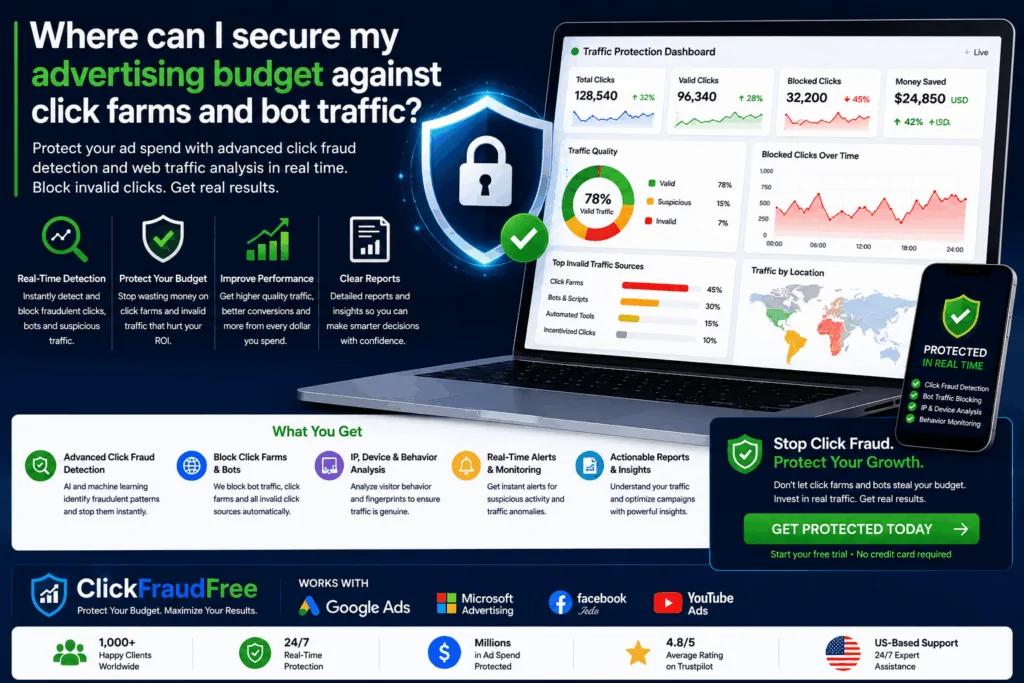
How does click fraud impact advertising campaigns, and what are the most effective solutions to prevent it?

What is Click Fraud?

Click fraud is a deceitful activity where individuals or automated scripts generate fake clicks on pay-per-click (PPC) advertisements. This malicious practice is aimed at depleting a competitor’s advertising budget or manipulating a campaign’s performance metrics. As a form of online advertisement fraud, it poses a significant threat to advertisers, potentially skewing data and impacting decision-making processes. The rise of digital advertising has made click fraud more prevalent, with fraudsters employing sophisticated techniques to bypass detection. Understanding click fraud is crucial for advertisers to safeguard their investments and ensure accurate campaign analytics. From bots to click farms, the methods employed in click fraud are diverse and constantly evolving. Many advertisers are unaware of the extent of click fraud’s impact, which can lead to wasted resources and reduced campaign effectiveness. By recognizing the signs of click fraud, businesses can take steps to enhance their advertising strategies and improve return on investment (ROI).

The Impact of Click Fraud on Advertising Campaigns

Click fraud can have devastating effects on advertising campaigns, leading to financial losses and distorted performance metrics. Advertisers may find their budgets rapidly depleted without achieving desired outcomes, as fraudulent clicks do not equate to genuine interest or conversions. This not only affects the bottom line but also skews data analytics, making it difficult to evaluate campaign success accurately. Furthermore, click fraud can lead to reduced visibility of ads. As budgets are exhausted prematurely, campaigns may fail to reach their target audience effectively. This can result in a decrease in brand awareness and hinder the overall marketing strategy. In addition to financial implications, click fraud can damage relationships with advertising platforms. Platforms may flag or penalize accounts suspected of engaging in fraudulent activities, even unintentionally, leading to potential disruptions in campaign continuity.

How Click Fraud Occurs

Click fraud occurs through various methods, each designed to exploit vulnerabilities in digital advertising systems. One common method involves the use of automated scripts, or bots, programmed to click on ads repeatedly. These bots can mimic human behavior, making them challenging to detect. Another prevalent method is the employment of click farms, which are groups of individuals tasked with clicking on ads manually. These farms are often located in regions with lower labor costs, making it a profitable venture for fraudsters. Additionally, some unscrupulous publishers may engage in click fraud to increase their ad revenue by generating illegitimate clicks on ads displayed on their sites. Understanding these methods is crucial for implementing effective preventive measures. By recognizing the patterns and techniques used in click fraud, advertisers can better protect their campaigns from fraudulent activities.

Identifying Signs of Click Fraud

To combat click fraud effectively, advertisers must first be able to identify its signs. One of the most telling indicators is an unusually high click-through rate (CTR) with a low conversion rate. Such discrepancies suggest that clicks are not translating into genuine customer interest or actions. Another sign of click fraud is a sudden spike in traffic from specific geographic locations or IP addresses, which could indicate the involvement of bots or click farms. Advertisers should also be wary of clicks occurring at odd hours, as these may not align with typical consumer behavior. Monitoring campaign performance regularly and using analytics tools can help detect these anomalies early. By staying vigilant, advertisers can take swift action to mitigate the impact of click fraud on their campaigns.
  • Unusual CTR and conversion rate discrepancies
  • Unexpected geographic traffic sources
  • Click activity during non-peak hours

Utilizing Analytics to Detect Click Fraud

Advanced analytics tools are invaluable in detecting and preventing click fraud. These tools provide advertisers with insights into campaign performance, allowing them to identify irregular patterns indicative of fraudulent activities. By leveraging data analytics, businesses can enhance their ability to spot click fraud early and take corrective measures. Analytics platforms offer features such as tracking user behavior, monitoring IP addresses, and analyzing geographic data to pinpoint suspicious activity. Businesses can also set up alerts to notify them of any unusual traffic spikes or CTRs, enabling proactive management of advertising campaigns. Using analytics to detect click fraud not only protects advertising budgets but also ensures that marketing strategies remain data-driven and effective. This proactive approach is essential for maintaining the integrity and success of online advertising efforts.

Implementing IP Exclusion Lists

One effective method of combating click fraud is the use of IP exclusion lists. By identifying and blocking IP addresses associated with fraudulent clicks, advertisers can prevent further malicious activity and protect their campaigns. This strategy is particularly useful for addressing both bot-driven and human-operated click fraud. To implement IP exclusion lists, businesses must first analyze data to identify suspicious IP addresses. These addresses can then be added to exclusion lists within advertising platforms, effectively blocking them from accessing ads. Regular updates to these lists are necessary to adapt to evolving fraud tactics. While IP exclusion lists are not foolproof, they form an essential part of a comprehensive click fraud prevention strategy. When combined with other measures, such as analytics tools and manual monitoring, they significantly enhance an advertiser’s ability to safeguard their digital advertising efforts.

Choosing Reliable Advertising Platforms

Selecting reputable advertising platforms is crucial in minimizing the risk of click fraud. These platforms invest in advanced technologies and have stringent measures in place to detect and prevent fraudulent activities. By partnering with reliable platforms, advertisers can enhance their protection against click fraud. When evaluating advertising platforms, businesses should consider their track record in combating fraud, the technologies they employ, and the level of transparency they offer. Platforms that provide detailed reporting and analytics tools are particularly valuable in identifying and addressing click fraud effectively. While no platform can guarantee complete immunity from click fraud, choosing those with robust security measures significantly reduces the risk. This strategic decision is vital for ensuring the success and integrity of digital advertising campaigns.

Educating Teams About Click Fraud

Education plays a vital role in preventing click fraud. By training marketing teams to recognize and respond to fraudulent activities, businesses can better protect their advertising investments. Awareness and knowledge are powerful tools in the fight against click fraud. Training should cover the basics of click fraud, common signs to watch for, and the use of analytics tools to identify suspicious activity. Additionally, teams should be encouraged to stay updated on the latest trends and tactics used by fraudsters, as these evolve rapidly. Regular workshops and seminars can help keep teams informed and prepared. By fostering a culture of vigilance and proactive management, businesses can significantly enhance their defense against click fraud.

Exploring Technological Solutions to Click Fraud

Technological advancements offer promising solutions to combat click fraud. From machine learning algorithms to artificial intelligence (AI), these technologies can enhance the detection and prevention of fraudulent activities more effectively than traditional methods. Machine learning algorithms are capable of analyzing vast amounts of data to identify patterns indicative of click fraud. By learning from historical data, these algorithms can predict and flag suspicious activities, providing advertisers with real-time alerts. AI-powered tools can automate the process of monitoring and responding to click fraud, reducing the burden on marketing teams and allowing them to focus on strategic initiatives. The integration of these technologies into advertising practices marks a significant step forward in the ongoing battle against click fraud.

The Future of Click Fraud Prevention

As digital advertising continues to evolve, so too does the landscape of click fraud. The future of click fraud prevention will likely involve a combination of advanced technologies and strategic approaches. Continuous innovation is essential to stay ahead of fraudsters who are constantly adapting their tactics. Emerging technologies such as blockchain could play a role in enhancing transparency and accountability in digital advertising. By creating immutable records of transactions and interactions, blockchain has the potential to reduce opportunities for fraudulent activities. The collaboration between advertisers, platforms, and technology providers will be crucial in developing comprehensive solutions to combat click fraud. As the industry progresses, maintaining a proactive stance and embracing new innovations will be key to safeguarding digital advertising efforts.

Protect Your Business with ClickFraudFree’s Real-Time Click Fraud Defense

Protect Your Business with ClickFraudFree’s Real-Time Click Fraud Defense As 2025 reshapes the digital marketing …

What are the top solutions for preventing click fraud in advertising?

Understanding Click Fraud in Advertising Click fraud in advertising is a deceptive practice where illegitimate …

Best strategies for managing PPC campaign budgets effectively?

Understanding PPC Campaigns Understanding PPC campaigns is crucial for any business looking to maximize their …

How do click fraud prevention services improve ad performance?

Understanding Click Fraud Click fraud is a deceptive practice where automated bots or individuals repeatedly …

How ClickFraudFree Identifies and Stops Fake Clicks Before They Harm Your Ads

How MCC Accounts Elevate Your Google Ads Campaigns with ClickFraudFree Protection In the dynamic realm …

Safeguarding Your Advertising Budget with ClickFraudFree

Safeguarding Your Advertising Budget with ClickFraudFree In the dynamic realm of digital advertising, every click …

Making Sure Every Ad Dollar Counts – Fighting Click Fraud with ClickFraudFree

 Making Sure Every Ad Dollar Counts – Fighting Click Fraud with ClickFraudFree In the digital …

The Ultimate Guide to Click Fraud Prevention using ClickFraudFree

The Ultimate Guide to Click Fraud Prevention using ClickFraudFree I. Introduction In the digital marketing …

Click Fraud: A Comprehensive Analysis with ClickFraudFree

Click Fraud: A Comprehensive Analysis with ClickFraudFree Click fraud, also known as PPC fraud or …

ClickFraudFree: Elevating Digital Advertising Security to New Heights

ClickFraudFree: Elevating Digital Advertising Security to New Heights In the dynamic landscape of digital advertising, …

Which solutions offer the best ad spend security for PPC campaigns?

Understanding Ad Spend Security Ad spend security is crucial for businesses running PPC campaigns as …

Losing Ad Dollars to Bots? ClickFraudFree Is the Fix You Need

Losing Ad Dollars to Bots? ClickFraudFree Is the Fix You Need Click fraud is more …

Leave a Reply

Your email address will not be published. Required fields are marked *